Testing of Digirail project’s new train control and Control Command and Signalling system has moved on to the next phase on the Tampere–Pori/Rauma track section. The test runs now started on the Kokemäki–Rauma track section will test system operation using rolling stock in a real-world rail environment. During test runs, the focus shifts from testing individual safety components in the field to verifying the system’s overall functionality.
Test runs are an important step toward the implementation of the new European train control system. These test runs help to examine how the ETCS (European Train Control System) equipment installed on the locomotive, the trackside safety equipment and the data connections between them work together.
The Kokemäki–Rauma track section reached testing readiness in the summer of 2026, after which various components of the system—including the operation of trackside equipment—have been tested on the track. Now that the rolling stock has been included in the testing, it is possible to examine the operation of the entire system more broadly, rather than focusing on individual devices.
“During the summer, the operation of individual trackside equipment, for example, has been verified in field tests.” Now that the rolling stock is also included in the test runs, we will be able to test the interoperability of the entire system,” says Project Manager Aapo Tiilikainen.
“The start of test runs is concrete proof of how far we have come. Now, for the first time, years of design, construction and phased testing are coming together as a complete system that we will be able to test using rolling stock in a real-world rail environment. At the same time, we are laying the groundwork for the future; the experience we gain here will help us move forward with the new train control system across the entire Finnish railway network,” Tiilikainen continues.
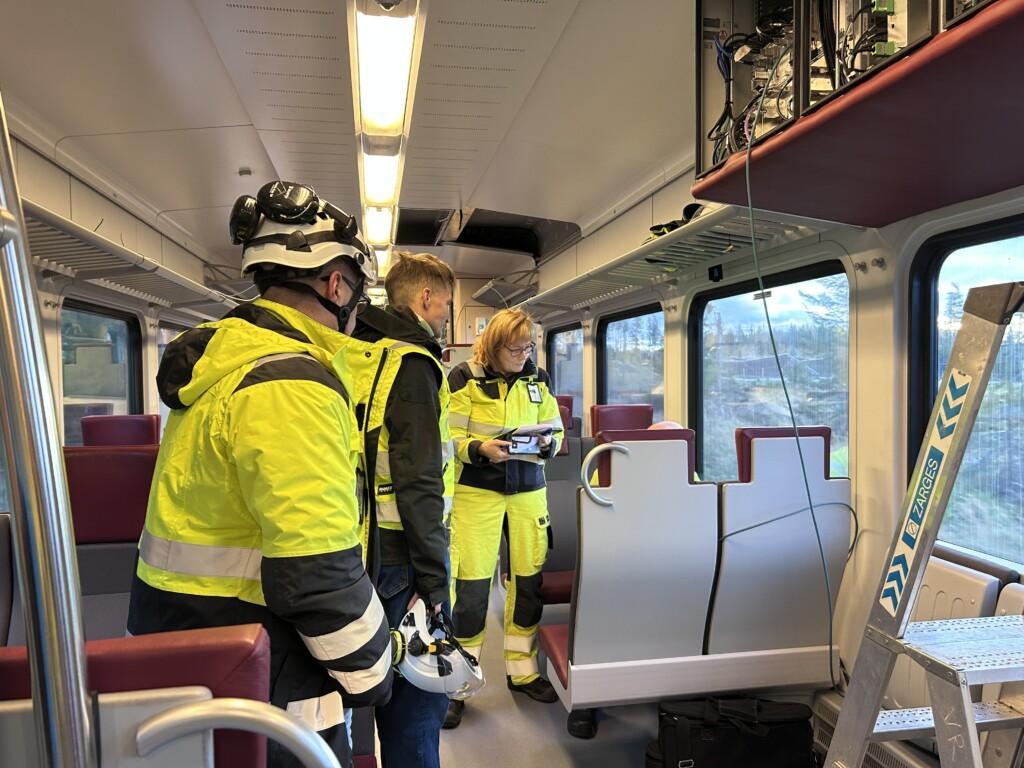
The test runs will test the system’s performance in real-world conditions
In the new ETCS, the train’s movement is continuously monitored. This differs from the JKV train control system currently in use in Finland, in which on-board units receive data from the track only at specific points where balises are located along the track.
“During the test runs, we test, for example, the train’s movement authority and verify that the system determines the correct end point for the train. We also test the speed control and system operation in situations where a train is approaching the end of its route’s authority. This will ensure that the train’s control system monitors the train’s speed and, if necessary, initiates braking as planned,” explains Commissioning Inspector Taina Lyly.
The testing also includes functionalities of the new system that are not available in the current train control system. The test runs examine, for example, situations in which a train’s movement authority is extended or shortened as traffic conditions change.
A key part of the test runs is testing the functioning of the radio connection. In the new system, the necessary information between the train and the trackside equipment is continuously transmitted via a radio network. Commercial mobile networks are used for data transmission on the Kokemäki–Rauma track section. Test runs are conducted to ensure that the connection between the train and the system operates reliably even while the train is in motion.
WSP is participating in Digirail testing as the commissioning inspector, VR as the train operator, and Pääkaupunkiseudun Junakalusto Oy as the supplier of ETCS-equipped test rolling stock. Siemens Mobility systems include the Centralized Security System (CSS) and the ETCS on-board equipment intended for testing of rolling stock, while Mipro is responsible for the Object Contoller system.
Test runs associated with commissioning inspections will continue throughout the autumn. In December, testing will move on to operational testing.
“It’s great that, after years of collaboration, ETCS testing is now moving forward on Finland’s first ETCS track section to be commissioned for commercial service.” The more we are able to test the system, rolling stock and operational models in a real-world track environment prior to commissioning, the better we can manage the risks associated with the change and lay the groundwork for high-quality, punctual and smooth service, even during the rollout of the new system. The experience gained here will benefit not only the commissioning of the Tampere–Pori/Rauma track section but also the future implementation of ETCS throughout Finland,” says Jonas Eriksson, Vice President of ERTMS program at VR.
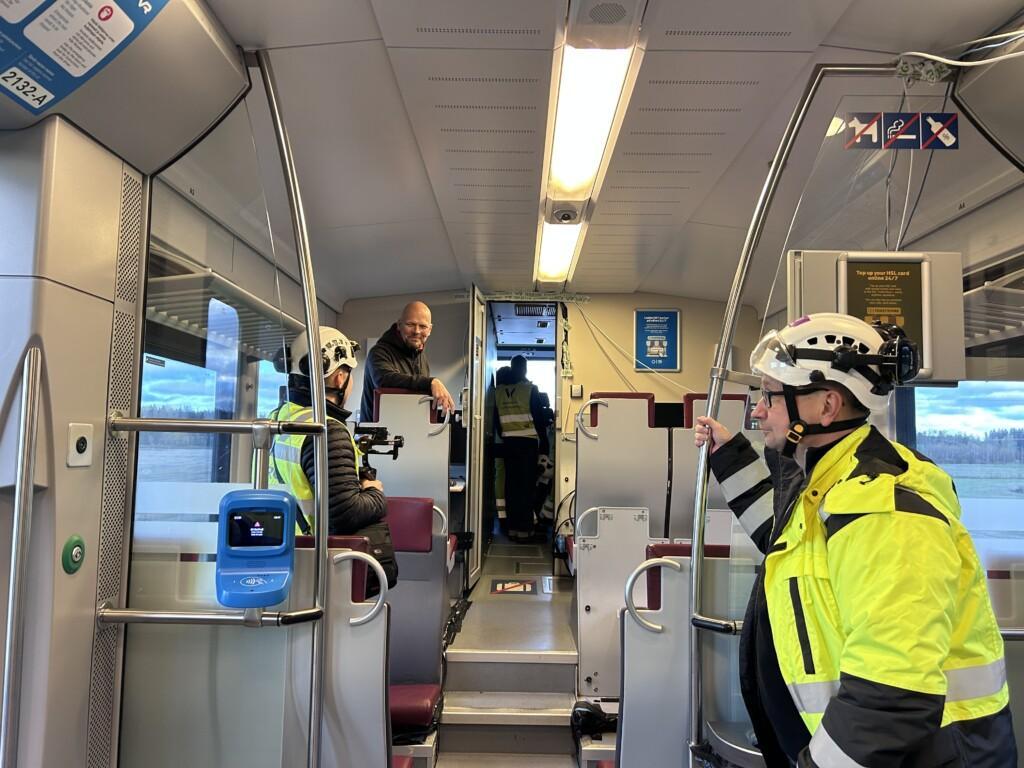
Lessons learnt from the first section for future implementations
The Tampere–Pori/Rauma track section is the first in Finland where the new system based on the European Train Control System (ETCS) will be introduced for both passenger and freight traffic. The work being carried out on this approximately 190-kilometer-long track section will also generate data and insights that can be utilised in future Digirail implementations throughout Finland.
As part of the Digirail project, Finland’s current train control system will be gradually upgraded to a system based on ERTMS (the European Rail Traffic Management System). The upgrade is necessary, as the current train control system is approaching the end of its life cycle. At the same time, Finland will transition to the pan-European system.
A radio-network-based ETCS level 2 train control system is being installed on the Tampere–Pori/Rauma track section. The track section is scheduled to be completed for passenger and freight traffic in September 2030. The goal is for the new train control system to cover the entire Finnish railway network by 2040.
The Digirail project is making rail transport in Finland safer, smoother and more efficient. The project will modernise and renovate the train control system and safety equipment, and implement a pan-European radio-based train control system across the entire railway network. Digirail will enable safe transport, an improved service level and growth of capacity, and it will create a long-term technical foundation for Finnish railway traffic. The Finnish Transport Infrastructure Agency, Fintraffic and the Ministry of Transport and Communications are collaborating in the project with other actors.